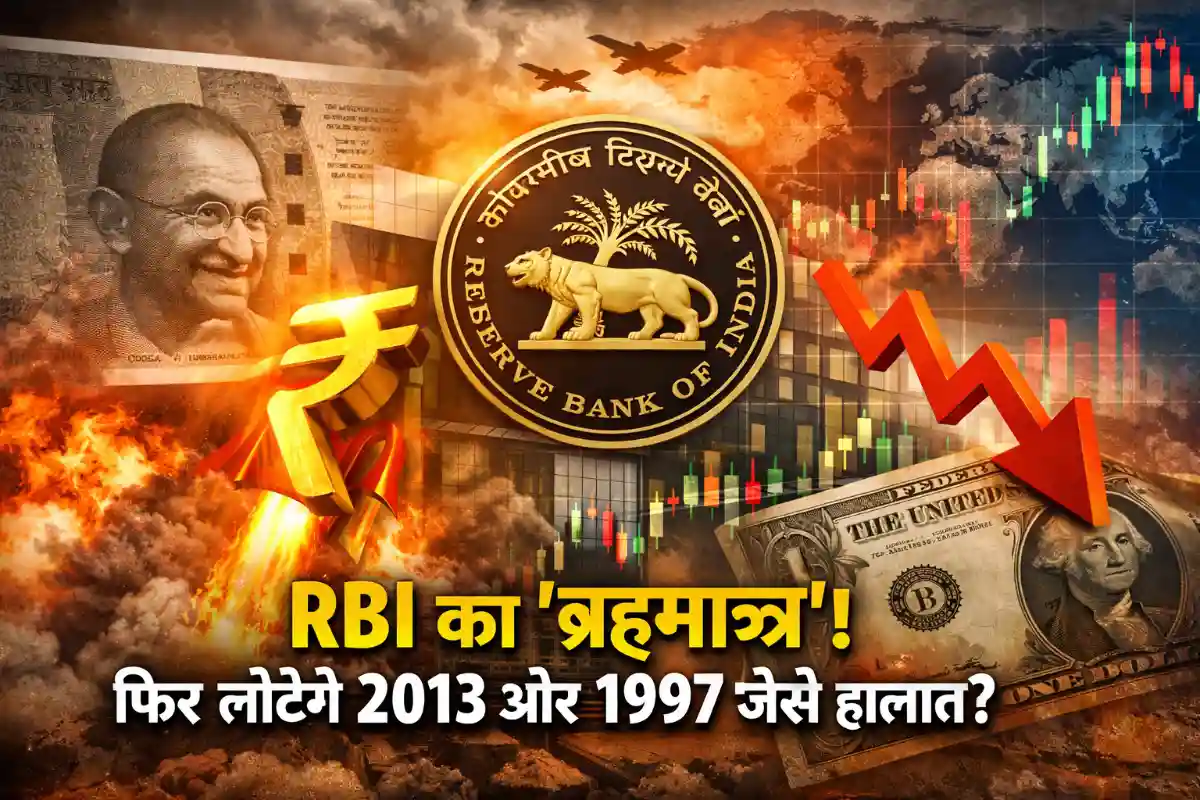
New Delhi: The ongoing Iran war has not just shaken geopolitical borders but also rattled the global economy. Inflation is soaring, stock markets are under pressure, and the Indian rupee has slipped into the list of worst-performing Asian currencies.
Amid these near-emergency conditions, the Reserve Bank of India (RBI) has opened its “crisis playbook.” In a late-night move on Wednesday, the central bank announced a series of bold decisions, bringing back memories of the 2013 “Taper Tantrum” and the 1997 Asian Financial Crisis.
RBI’s Big Move: Crackdown on Speculation
To stop the rupee’s fall, RBI has tightened its grip on banks.
- Banks’ net open rupee position has been slashed to just $100 million, down from the earlier limit of up to 25% of their capital.
- Banks have also been barred from offering Non-Deliverable Forwards (NDFs).
In simple terms, RBI has shut down key routes used for speculative trading on the rupee. This single move forced banks to unwind nearly $30 billion worth of trades.
The message is loud and clear: Rupee stability comes first.
Flashback: When India Was Among ‘Fragile Five’ in 2013
The current situation echoes 2013, when India was labeled among the world’s “Fragile Five” economies. Back then, the US Federal Reserve hinted at withdrawing easy monetary policies, triggering massive capital outflows from emerging markets like India.
To tackle the crisis, then RBI Governor Raghuram Rajan introduced bold steps:
- FCNR(B) Swap Window: Attracted $26 billion in just 3 months
- Gold Import Restrictions: Duty raised to 10% with strict rules
- Interest Rate Hike: Repo rate pushed to 8%
These “surgical strikes” helped stabilize the rupee back then.
1997 Crisis: Lessons from the Past
Going further back, the 1997 Asian Financial Crisis also offers key lessons.
While Southeast Asia suffered heavily, India remained relatively safe. Then RBI Governor Bimal Jalan allowed the rupee to adjust gradually by about 18% instead of a sudden crash.
He also launched Resurgent India Bonds (RIB), raising $4 billion from NRIs to strengthen forex reserves.
Rupee Fights Back: Biggest Jump in 12 Years!
After hitting a historic low of 95.22 per dollar in March, the rupee made a stunning comeback.
- On April 2, the rupee surged nearly 2% to 92.94 per dollar
- This marks the biggest single-day gain since September 2013
The sharp rise came after RBI’s strict steps to curb speculation, leading to heavy dollar selling in the market.
What It Means for You
A stronger rupee could bring relief to common people:
- Cheaper imports (fuel, electronics, mobile phones)
- Possible easing of inflation
However, exporters may feel the pinch as a strong rupee makes Indian goods costlier abroad.
What Lies Ahead?
Experts believe RBI’s actions may offer short-term stability, but risks remain:
- Rising global oil prices
- Foreign investors pulling out funds
Some analysts expect the rupee to trade between ₹90–₹92, while worst-case scenarios could push it towards ₹100 per dollar.
The RBI still holds strong forex reserves and can intervene further if needed. Much will depend on global tensions and oil prices in the coming weeks.
Bottom Line
India has weathered crises before—and history shows it knows how to respond. Now, all eyes are on whether RBI’s latest “Brahmastra” can once again shield the rupee from global shocks.